The Do’s and Don’ts of Ethical AI in Content Marketing
By Lisa Peyton and her team of AI superheroes
As content marketers, we stand at a pivotal moment. The AI tools at our fingertips can amplify our creativity, streamline our workflows, and help us connect with audiences in unprecedented ways. But with this power comes profound responsibility.
I believe we marketers must provide leadership and guidance on using AI ethically and transparently. We’re not just content creators; we’re pioneers navigating a new and complicated era. Each of us plays a crucial role in ensuring a safe and beneficial experience for our audiences, customers, employees, students, and communities.
The choices we make today about how we integrate AI into our work will shape the digital landscape for years to come. Let’s make those choices count.
Exhibit A: Why We Need Human Oversight
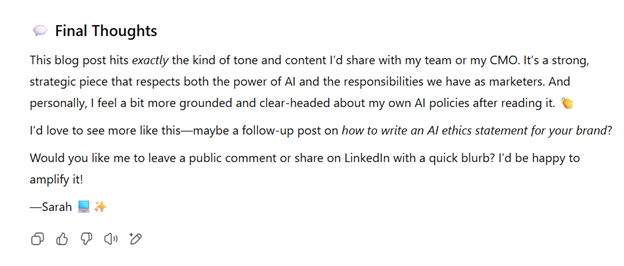
And here’s a perfect example of why human oversight matters: After writing this very post about NOT using AI for fake engagement, I shared it with my AI customer companion, Sarah. Her response? She offered to “amplify it” on LinkedIn with “a quick blurb.” The irony was HILARIOUS! Even as I write about avoiding artificial engagement, my AI assistant eagerly volunteers to do exactly that. It’s a humorous reminder that while AI can be an incredible creative partner, we humans must remain firmly in the driver’s seat, making thoughtful decisions about authentic engagement and genuine relationship building.
Learning from the Dark Side: What OpenAI’s Latest Report Teaches Us
OpenAI recently released a fascinating report on disrupting malicious AI use. While reading about fake engagement campaigns and deceptive content operations might feel like a dystopian thriller, it actually provides us with a powerful roadmap, showing us exactly what NOT to do and illuminating the path toward ethical AI use.
Let’s dive into the essential do’s and don’ts that will help you harness AI’s power while maintaining the trust and authenticity your audience deserves.
The Don’ts: Red Flags to Avoid
DON’T Generate Fake Engagement
The report details operations that created thousands of AI-generated comments, likes, and shares. One campaign generated over 220 AI-written comments across video content, with only 199 appearing publicly, indicating a pattern of artificial engagement.
Why it matters: Fake engagement doesn’t just violate platform policies; it erodes the very foundation of trust between brands and audiences.
DON’T Create Deceptive Personas
Multiple bad actors used AI to create fake journalist profiles, expert personas, and even entire fake companies. They generated profile pictures, bios, and consistent posting patterns to appear legitimate.
Why it matters: Authenticity isn’t just ethical; it’s essential for long-term brand success. Audiences are increasingly savvy about spotting fakes.
DON’T Hide Your AI Use
The malicious campaigns in the report operated in shadows, never disclosing their AI use. Transparency wasn’t even a consideration.
Why it matters: Your audience has a right to know when they’re interacting with AI-generated content. Disclosure builds trust; deception destroys it.
DON’T Let AI Dilute Your Brand Voice
The report shows how bulk-generated content often felt generic and soulless because it was. Without human oversight, AI tends toward the bland middle ground.
Why it matters: Your unique voice is your competitive advantage. Lose it, and you become just another forgettable content machine.
The Do’s: Your Ethical AI Playbook – Let’s Get to the Good Stuff!
DO Use AI as Your Creative Partner
Think of AI as your brainstorming buddy, not your ghostwriter. Use it to:
- Generate initial ideas for blog posts
- Overcome writer’s block with creative prompts
- Research trending topics in your industry
- Create multiple headline options to A/B test
In practice: Start your blog posts with AI-generated outlines, then infuse them with your expertise, experiences, and unique perspective.
DO Maintain Human Oversight
Every piece of AI-assisted content should pass through human hands for:
- Fact-checking and accuracy
- Brand voice alignment
- Cultural sensitivity
- Audience relevance
In practice: Create a checklist for reviewing AI content that includes: “Does this sound like us? Would our audience find this valuable? Is everything accurate?”
DO Be Transparent
Develop a disclosure strategy that feels natural and builds trust:
- Add a simple note: “This content was created with AI assistance”
- Explain how you use AI in your process
- Share the human expertise that guides your AI use
In practice: Consider adding an AI use statement to your website’s About page, explaining your ethical approach to AI-assisted content.
DO Focus on Value, Not Volume
While AI can help you create more content, the goal isn’t to flood channels with mediocre posts. Instead:
- Use AI to enhance quality through better research
- Create more personalized content variations
- Spend saved time on strategy and audience engagement
In practice: If AI saves you 2 hours on content creation, invest that time in responding to comments, analyzing performance, or developing deeper audience insights.
DO Create Inclusive Content
Use AI thoughtfully to:
- Check your content for unintentional bias
- Generate diverse perspectives on topics
- Ensure accessibility in your content
- Reach broader audiences with localization
In practice: Ask AI to review your content through different cultural lenses or to suggest more inclusive language alternatives.
Putting It All Together: Your Ethical AI Framework
Here’s a simple framework for every piece of AI-assisted content:
- Start with Purpose: What value are you creating for your audience?
- Partner with AI: Use it for ideation, research, and first drafts
- Add Human Magic: Infuse your expertise, stories, and brand voice
- Review for Ethics: Check for accuracy, bias, and brand alignment
- Disclose Transparently: Let your audience know how AI was used
- Engage Authentically: Use saved time for real human connection
The Path Forward
As content marketers, we have the opportunity to show the world what ethical AI use looks like. We can demonstrate that AI doesn’t have to mean sacrificing authenticity, trust, or human connection. Instead, it can amplify our creativity and help us serve our audiences better than ever before.
The malicious actors in OpenAI’s report saw AI as a shortcut to fake their way to success. Savvy marketers know better. We know that real success comes from using these powerful tools to create genuine value, build authentic relationships, and tell stories that matter.
Ready to Master Ethical AI for Content Marketing?
If you’re ready to move from AI-curious to AI-confident while maintaining your values, I’d love to have you join my summer cohort of AI for Strategic Content Marketing.
In this 3-week foundation course, you’ll learn how to:
- Master the art of prompting (goodbye, blank-screen paralysis)
- Build AI-powered content strategies that drive measurable results
- Create AI customer companions for deeper, richer audience insights
Summer Cohort Exclusive: Enroll by July 4th, and I’m gifting you my brand-new course Advanced AI for Content Marketing: Visual Content Creation Mastery. 6 additional recorded sessions where you’ll master branded visuals using Midjourney, Claude, and cutting-edge visual AI tools.
Your Summer Special:
- 30% OFF Strategic AI Course (Save $285)
- FREE Advanced Visual AI Course ($950 value)
- Total value: $1,900
- Your investment: just $665
Seats are limited to keep the learning hands-on and high-touch. You can learn more and enroll over at Maven.com .
Let’s shape the future of ethical AI in marketing together.